Agora Hospitality Group Expands Investment Strategy With Focus on Undervalued Assets and Regional Revitalization
In recent years, Agora Hospitality Group has nearly doubled its portfolio, signing new properties across Japan, including locations in Tokyo, Osaka and Kyoto, As the executive leading this growth, how have you approached property selection and portfolio expansion?
Agora is a Japanese-listed real estate company with a multicultural DNA and long-standing presence in the Japanese market. We have experience not only in developing and operating our own hotels, but also in managing properties on behalf of capital partners and third party owners.
Historically, the Group focuses on full-service hotels and traditional ryokan resorts. Since stepping into my role a few years ago, I have reoriented our strategy to focus on areas where we can deliver the strongest returns – we are Japanese at our core, but we operate with a global perspective and a culturally agile team that understands both international investor expectations and local market dynamics.
With a background in real estate investment, I approach portfolio growth with an owner-investor mindset. I understand that different investors, especially financial and institutional partners, prioritize capital efficiency and exit options, not just product quality. That means we must be thoughtful not only about the guest experience but also about liquidity, timing, and long-term asset positioning
Under this strategy, we have doubled our portfolio through a mix of greenfield development, acquisitions and third-party management contracts.
You just mentioned international investors. How are you targeting those investors, and how do you differentiate yourself from traditional Japanese operators?
We work closely with both domestic and international investors, and I believe our value lies in combining deep local expertise with a global mindset.
Our team has a track record of identifying off-market deals and value-add opportunities, especially in the years before the pandemic. We’re often able to secure assets at attractive entry points and guide them through the full cycle from deal sourcing and financing to construction, pre-opening, operations, and exit strategy.
Whether co-investing or managing, we remains flexible and support our partners’ goals by offering flexibility and transparency. Thanks to our performance track record, we can often remain in place post-sale.
When you and your team evaluate a new opportunity, what are the key metrics or criteria you prioritize to determine whether it will be a strong investment?
Whether we are deploying our own capital, co-investing, or partnering with external investors, return on investment is always the key metric.
While larger operators often prioritize brand expansion and require rigid adherence to brand standards, we take a flexible but disciplined approach. For us, it’s not about growing for the sake of scale, it’s about ensuring each dollar deployed generates meaningful value aligns with market relevance.
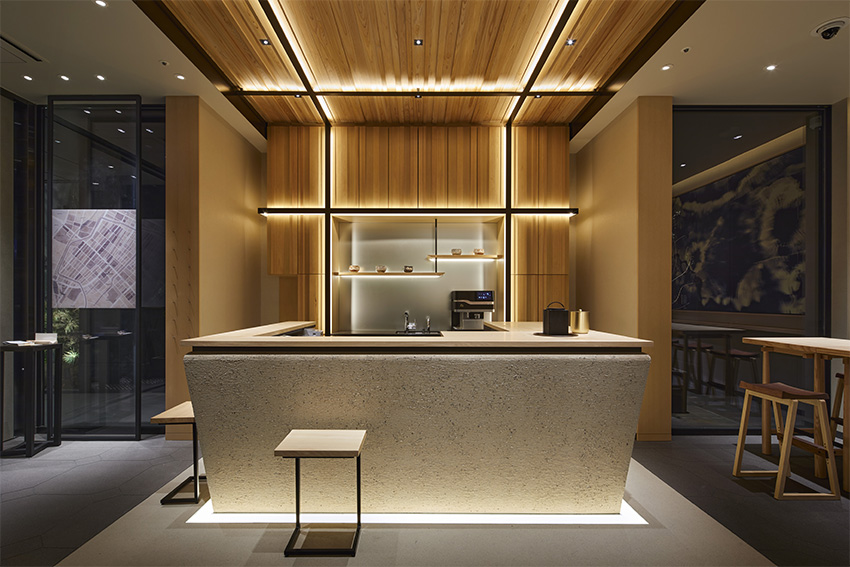
Our Tokyo Ginza project is a good example. Before COVID, we acquired two connected office buildings in Ginza and developed our own hotel on the site. Instead of replicating a luxury model, we targeted an underserved segment of the market: independent travelers seeking a high-quality stay but without the full-service facilities.
It was a fully self-developed project, and the investment has performed well. Based on current valuations, the asset has already more than doubled our original cost. That kind of return demonstrates how thoughtful design and market fit can drive performance without excessive spend.
Agora Tokyo Ginza
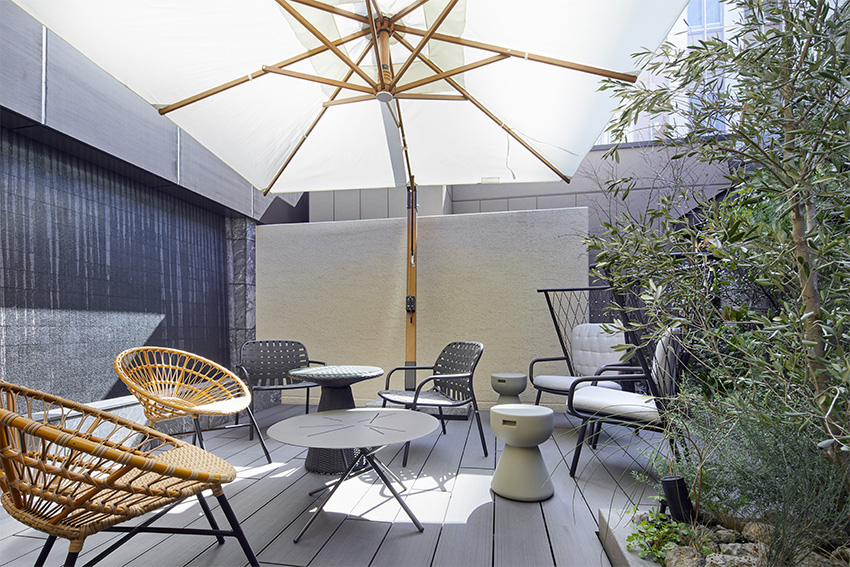
Agora Tokyo Ginza: Outdoor Lounge
Agora Tokyo Ginza: Outdoor Lounge
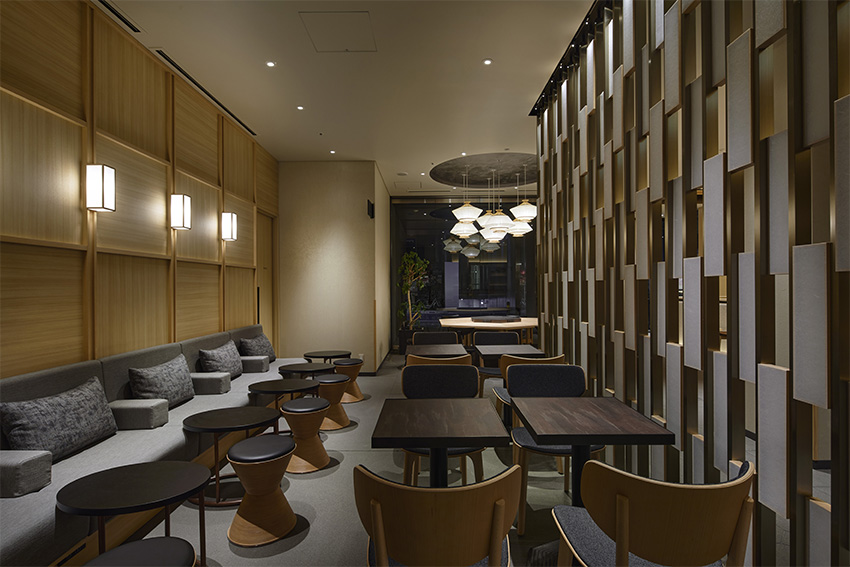
Agora Tokyo Ginza: Ichie Lounge
As you mentioned, you offer a one-stop development service and strategic positioning, but you also bring strong operational capabilities that can enhance a property’s value ahead of an exit. Could you tell us more about the specific advantages and capabilities you have when it comes to improving hotel operations?
Among all real estate investments, hotels are the most operationally intensive, and that’s where I believe real value can be unlocked. in sectors like office, residential, or retail properties, once leases are signed, upside is limited.
Hotel performance, on the other hand,
can be actively driven, optimized, and scaled. Before COVID, many hotel projects in Japan were structured under master lease to prioritize stability, but the pandemic revealed the limitations – the lease meant little. Since then, the market has shifted toward management contracts, and that’s where we add the most value.
We work closely with owners to drive NOI through data-driven revenue management, capex planning, and hands-on operational improvements. Because we operate in a few concentrated urban clusters, we achieve scale and efficiency while keeping decision-making local.
When it comes to your exit strategy, how do you determine whether to divest, reposition, or retain a property? And how do you go about finding the right partner to ensure the best possible value at the time of exit?
We’re actually quite flexible and opportunistic, primarily because we’re not a fund and we don’t operate under a strict investment horizon. That gives us flexibility to respond to market conditions and take a long-term view when needed. Our exit strategy is driven by asset performance, market timing, and capital recycling priorities.
Whether we choose to divest or reposition a property using either our own capital or working with a partner really depends on the specific project and timing. When we believe value can be enhanced operationally, our preference is to stabilize income first, then evaluate whether to divest, reposition, or continue holding. That way, we can optimize both returns and timing.
With tourism in Japan booming, we’re seeing more institutional and private investors entering the market to invest in hotels. When you look for exit or investment partners, are you seeing an increase in interest from foreign institutional investors in the Japanese market?
Yes. Interest has definitely picked up, and not just from international funds. We continue to work closely with a range of capital partners, including family offices and high-net-worth individuals. Many of them are becoming more familiar with the Japanese market and are beginning to look beyond the traditional Tier 1 cities as Tier 2 and 3 destinations are now attracting more attention thanks to growing tourism numbers and better infrastructure implemented by the government. We often help our partners source these opportunities and provide local insights they wouldn’t easily access.
One example is our Ohama project in Sakai City, Osaka Prefecture. It’s strategically located between Kansai International Airport and central Osaka, with relatively attractive entry pricing. We’ve partnered with the local government to not only develop hotel accommodation but also contribute to area revitalization and workforce development.
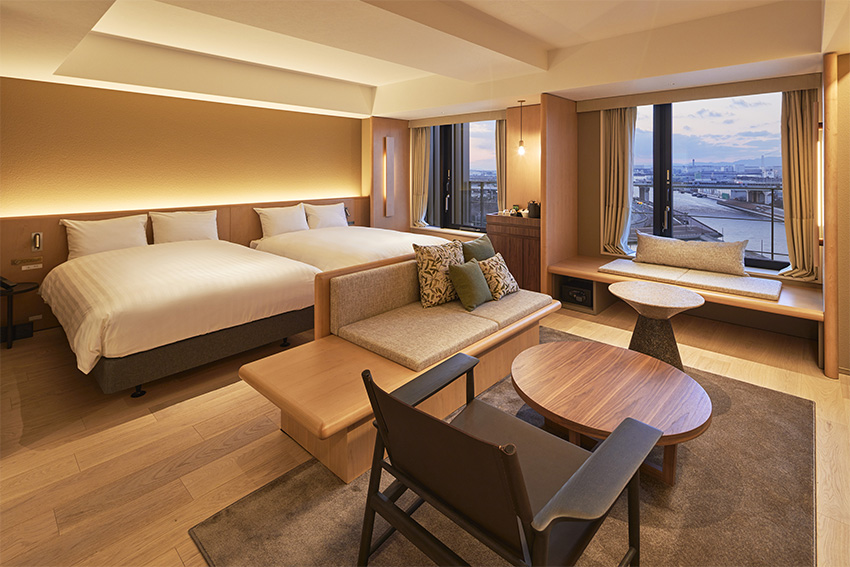
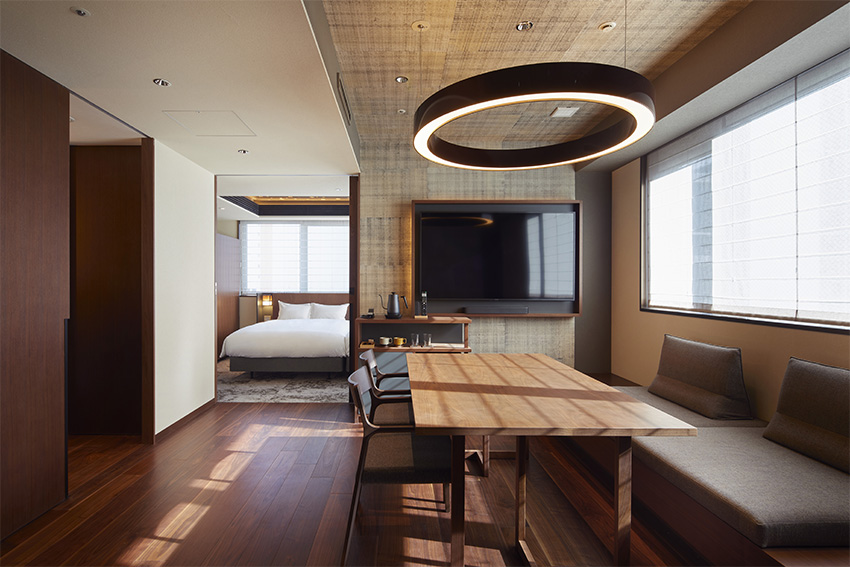
Dorsett by Agora Osaka Sakai: Waterfront Premier Suite
Regarding the revitalization work you’re doing in partnership with the Sakai government, are you exploring similar public-private cooperation opportunities with other prefectural or local governments across Japan?
Yes, we are. We’ve maintained a strong relationship with Sakai City since we began operating the Agora Regency Osaka Sakai Hotel, and we recently added the Dorsett by Agora Osaka Sakai in the Ohama area. Our experience there has encouraged us to explore similar partnerships elsewhere in Japan. We see real opportunity to work with local governments that are actively promoting regional development, especially as tourism expands beyond major city centers.
I believe what sets us apart is our ability to bring both local commitment and an international perspective. As a Japanese company, we understand our responsibility to support the communities we operate in. At the same time, we also see tourism and investment potential in places others might overlook. Local governments value that combination, and they count on us to help position their cities for a broader global audience.
How does the challenge differ between working on a public-private project in an underrepresented area like Sakai and managing a private project in a well-known, high-profile location such as Ginza?
The approach and mindset are quite different. In Sakai, we’re working on a greenfield public-private partnership with strong government support. The local authorities have been collaborative from the start, and the project extends beyond commercial returns. It’s part of a broader city revitalization effort that balances commercial outcomes with community impact.
On the other hand, our Ginza development was a fully self-developed project focused on investment performance. It was a strategic move to build our brand in Tokyo and deliver strong returns.
Since joining the company, which project has been your personal favorite, and what made it particularly meaningful or memorable for you?
I have a few favorites, but I would say the The Garner project has been a meaningful step to start our journey of being a third-party operator. With limited new supply due to high construction costs, investors leaned into converting distressed assets into well-run, branded hotels. Many global brands prefer to enter Japan through franchising, which creates an opening for experienced operators like us. It’s a new growth avenue I’m excited to pursue.
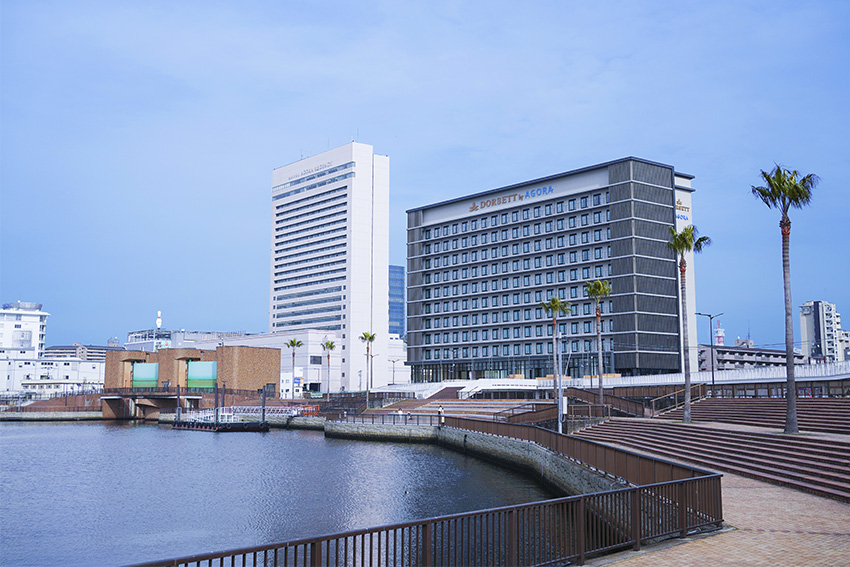
Dorsett by Agora Osaka Sakai
Beyond third-party operator opportunities, what do you see as the most promising areas for new Agora hotel investments and projects in the coming years?
Our strategy depends on the opportunity, but given current market conditions, we’re focused more on value-added investments projects. With construction costs remaining high, we are seeing more opportunities in underperforming or distressed assets that can be transformed through design, branding, and operational improvements.
That said, we remain bullish on the overall market. Our approach is flexible, we can invest directly, co-invest with partners, or take on third-party management, depending on what is most suitable for the asset and market.
If we return to interview you again in five years, what goals or objectives would you like to have achieved by that time?
In five years, I hope to show you that Agora has continued to grow its footprint across Japan and beyond the region. In Japan, our goal is to grow selectively in key cities while building more operational depth. Strengthening our regional teams and aligning closely with our centralized office in Osaka will allow us to operate more efficiently and support both owners and guests at a higher level.
Outside of Japan, we have already expanded our platform beyond hospitality. We own and operate a memorial park business in Malaysia and a residential development project in Australia. These ventures reflect our broader focus on long-term value creation in lifestyle and real estate sectors across Asia-Pacific.
By building scale domestically and deepening our regional footprint, we hope to continue growing as a cross-border developer and operator to bring together design, community, and long-term capital.
As you expand the brand and portfolio, are you planning to maintain the same corporate structure you have today, or are you considering new approaches—such as launching a fund—to support future growth?
Our balance sheet and cash flow are healthy, and we’re fully capable of continuing our growth independently. That said, if the right partner brings not just capital but also strategic value, we’re open to exploring new structures and partnerships. Ultimately, it comes down to the quality of the opportunity and how well it aligns with our long-term vision.
For more information, please visit their website at: https://www.agora.jp/en/about/
link